Available for: Edtech panels  ·  Keynotes  ·  Podcasts  ·  Advising  ·  Edtech panels  ·  Keynotes  ·  Podcasts  ·  Advising  ·  Available for: Edtech panels  ·  Keynotes  ·  Podcasts  ·  Advising  ·  Edtech panels  ·  Keynotes  ·  Podcasts  ·  Advising  · 

Learning and building, on repeat — thinking, writing, and speaking about how to best teach kids to do the same.

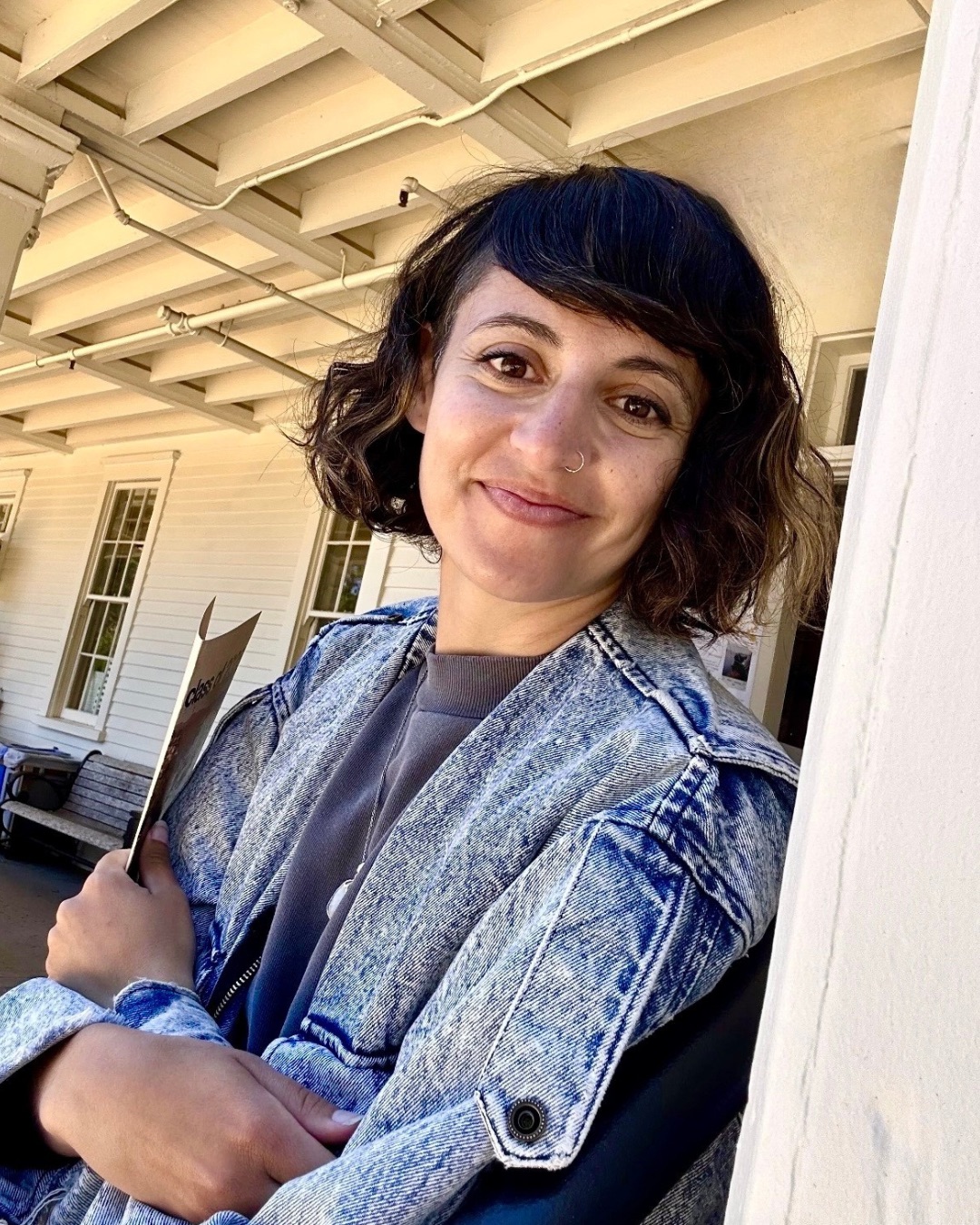
Hi. I'm Sara — I'm so glad you're here.

I'm a founder, educator, mother and maker. These days, I'm working with Russel Simmons to co-found Wyla, a research-backed spelling app I prototyped alongside my 10-year-old daughter. I bring care to my building and building to my carework — I build daily, ship what I learn, and document my journey along the way.

Sara Sadek

Projects.

When adults actively practice the creative capacity we want kids to embody — when our kids see us bubbling with curiosity and drive to bring something imagined into real life, and when we invite them into that journey with us — they can't help but want to learn to make, too.

Current Project · Wyla Studios

Wyla

A research-backed spelling app for kids, grounded in orthographic mapping and spaced repetition — built without the dark patterns common in children's tech. Wyla started as a Replit prototype I co-created with my 10-year-old. It's now a bootstrapped startup I'm grateful to co-found alongside my CTO, Russel Simmons.

In private beta with ~20 families · 700+ waitlist · Public launch fall 2026

Built with code

Spellseeker

The original Wyla prototype: the scrappy Replit version my daughter and I built with Russ's guidance — proof the idea worked before the real build.

MathSeeker

A math-facts quest game I built for my kids — timed races, creatures, and research-backed practice.

Map the Load ↗

A collective art experiment visualizing the invisible labor of the maternal mental load.

Beyond code

Folkweaver ↗

A creative community and studio for makers and mothers.

Wild Roots

Co-founder of a cooperative forest preschool

Attuned Advising

Founder of a boutique DEI consultancy

Adara and the Elders

A YA fantasy manuscript

Seasonal Zines ↗

A year-long zine collaboration with Lesley Numbers

How I build

Learn Build Ship Teach

A bit about me

I've spent two decades in education — teaching 5th grade in West Harlem with Teach For America, then helping scale Teach For All and Girls Who Code internationally. I hold a Masters in Education and recently served on the pedagogy committee at Brightworks School, an alternative school here in San Francisco. I homebirthed my babies, co-founded a cooperative forest preschool, trained as a doula, and led several connection parenting communities. Today I'm co-founding Wyla — an ethical edtech company designed from the ground up on liberatory principles.

When I became a mother, I started my own deschooling — unlearning the very systems I'd excelled in. Motherhood was the catalyst for understanding how traditional schooling creates conformity and limits our individual and collective imagination. I came to see freeing our own imaginations as a prerequisite for raising and educating free people, and started to recognize all the places that traditional schooling (and work environments!) limit our capacity to dream.

In the study and practice of mothering my own children, I also came to realize that deep, attuned connection is central to the work of liberating ourselves and each other. Through deep attunement and support, we create the conditions for one another to thrive. Consent-based, liberation-based learning isn't a philosophy — it's a relational practice.

I've been in deep study about what blocks kids and adults alike from learning, making, and accessing their full creative capacity, and what it takes to create educational environments that unleash both our belief in our capacity and our active practice in actualizing it.

I am a multimodal creator: I write, screenprint, make zines, and code — documenting my journey along the way. It's the same way I hope children get to learn: by making things that matter to them and putting them into the world.

"No one educates anyone else, nor do we educate ourselves. We educate one another in communion."

Some things I believe.

01

Kids are capable.

They are brimming with creative ideas, curiosities and questions. Our job is to meet and support them there.

02

They have rights.

Children have rights to their bodies and minds and spirits. They deserve to be treated with dignity and kindness and respect.

03

They learn best when seen and safe.

Kids learn when they are seen and safe, supported and attuned to, encouraged and delighted in.

04

Kids deserve to be active co-constructors of their own learning.

Given the space, support, and trust of adults who believe in them, children naturally pursue what matters to them.

05

Learning is relational.

Who surrounds us has a huge impact on our ability to bring our ideas to life. When we're in trusted, supportive containers, we create the conditions for mutual thriving.

06

Our collective life's work is to remember our connection.

To ourselves, each other, and this planet. When we do the inner and outer work to liberate young people, we liberate ourselves in the process.

"The first step we can take to unleash the potential for freedom dreams to transform this waiting world into a place where all children can play is to quiet the cynical voice in our heads that stands watch, guarding the borders of our imagination."

It's time for a new era of
ethical learning tools.

When Russ and I set out to build Wyla, we made one condition: we would build high-integrity, ethical tech that deeply respects kids and the actual process of learning.

Most learning apps are mostly filler.

In most learning apps, kids spend so much time on everything but the actual deep satisfying work of learning. They're also full of anxiety-inducing streaks, lost points, and other punitive ways of getting kids to stay in-app.

We don't do any of that.

We don't believe in wasting kids' time. Wyla has no streaks to lose, no guilt mechanics, no addictive loops — just the deep, satisfying work of learning.

Building tech consciously.

We know that building this as two tech-conscious parents lets us center our integrity, our values, and our reverence for learner-centered tech tools that deeply see and respect and honor children and their process of learning.

What that means for Wyla.

Wyla is a research-backed learning tool that has very little fluff. Its potent and adaptive learning works in minutes a day so your child's time is not wasted. It's free of punitive/shame-based incentives and addictive algorithmic loops.

The ethical tech ecosystem is one of the most important communities we can build right now. It's what I build, write, and speak about — if you're gathering founders, researchers, or parents around it, I'd love to be on that stage.

"The place in which I fit won't exist until I make it."

Writing.

Field Notes — weekly essays on learning, care, and building ethical tech. The Maker Stack — where I write about what I'm building and how. Bylines in Motherly, Mutha Magazine, and HTH Unboxed.

Speaking, panels,
and advising.

Two decades in education. Now building, advising, and speaking at the intersection of liberatory pedagogy, memory science, and edtech. Available for edtech panels, keynotes, podcasts, and advising.

Panels & Speaking

Sara speaks about co-creating education with, not for, children — edtech, liberatory learning, and what it means to build alongside kids. Signature talks: 'Disrupting Power Hierarchy between Adults and Kids' · 'Building Wyla with my Kid' · 'Education as a Relational Practice' · 'Co-creating Education with Kids.'

Writing

Essays and features on learning, care, and building ethical tech — from a former teacher building in the open. Bylines in Motherly, Mutha Magazine, and HTH Unboxed; weekly at Field Notes.

Advising

Strategic advising and deep-dive consulting for edtech founders, school leaders, and organizations building education that centers children's full humanity and agency — at the intersection of memory science, liberatory pedagogy, and technology design. Particularly for folks asking: what's actually best for kids?

Nice things people say.

Freeing our imagination —
freeing our sense of what's possible —
breaking down the boxes that confine us —
is only possible together.

That is what relational, liberation-based education is all about.